Varanasi
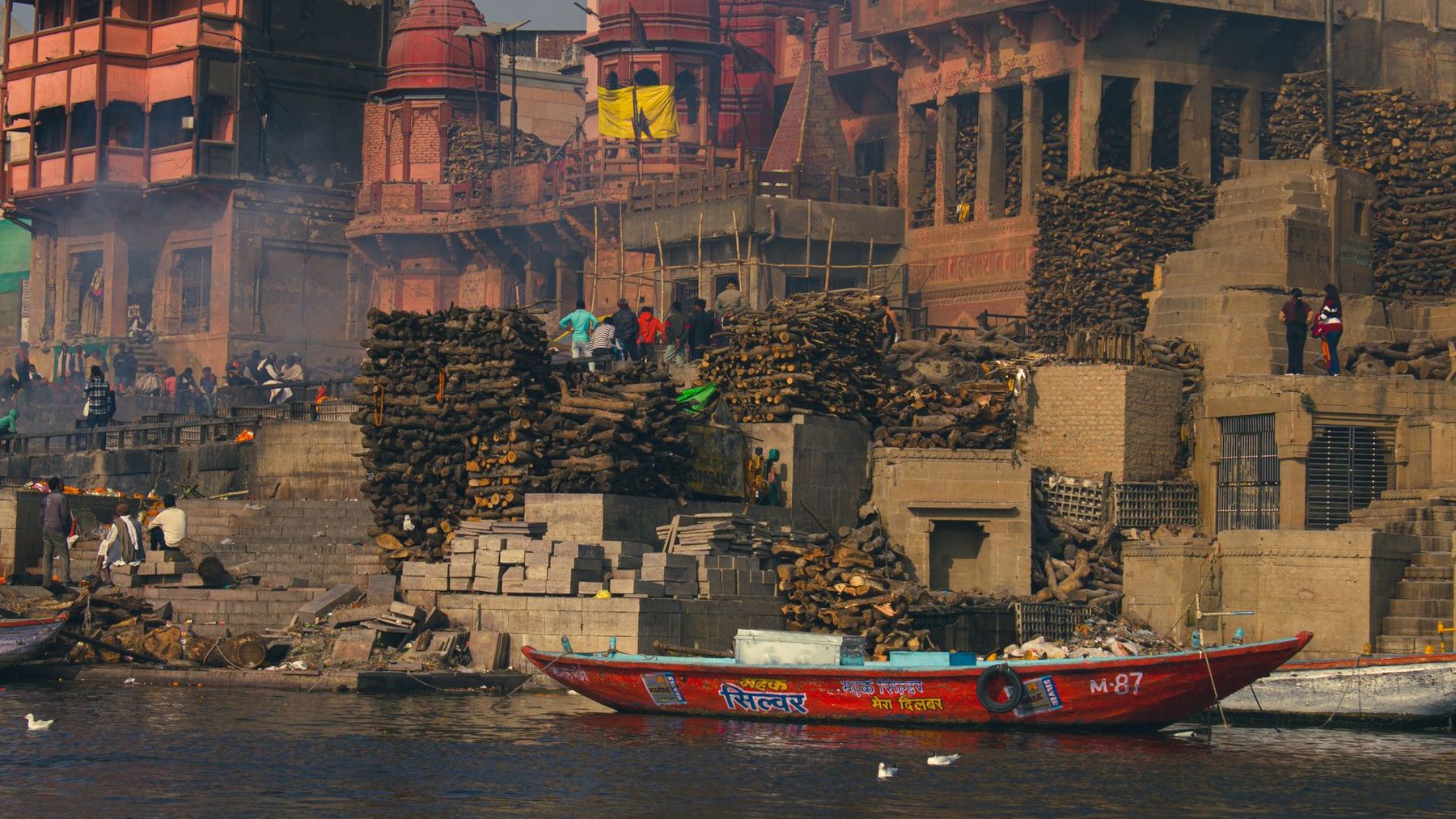
Overview
Varanasi is one of the oldest continuously inhabited cities on earth, and it wears that age openly along its ghats — the stepped riverfronts where cremation rites, morning bathing, evening prayer, and ordinary daily life all happen within sight of each other on the Ganga. It's intense by design, not by accident; go expecting to be a quiet observer rather than a checklist tourist, and it becomes one of the most affecting places in India.
Best time to visit
October through March, once the monsoon humidity clears and before the pre-summer heat sets in. Dev Deepawali — fifteen days after Diwali, timed to Kartik Purnima and usually falling in November — is the single most spectacular night to be there: every ghat is lined with tens of thousands of oil lamps, and it draws crowds to match, so book riverfront accommodation well ahead. Outside that night, December and January offer the same cool, clear weather with a fraction of the density.
Things to do
- Take a dawn boat ride on the Ganga from Assi or Dashashwamedh Ghat — the light is softest just after sunrise, and it's the only vantage point that shows the full sweep of the ghats at once.
- Watch (or attend) Ganga Aarti at Dashashwamedh Ghat every evening — an hour-long, choreographed fire ritual with seven priests. Arrive at least 45 minutes early to get a seated view rather than watching from the back of a standing crowd.
- See Dev Deepawali from the water, not the bank, if your dates align — a boat gives you the full length of illuminated ghats rather than one fixed viewpoint, though river traffic is heavy that night and boats should be booked in advance.
- Walk the ghats on foot during the day, away from the two main tourist ghats — Manikarnika (the primary cremation ghat, observe respectfully and without photographing) and the quieter stretches toward Assi Ghat, where daily life is more visible than performance.
- Visit Sarnath, 10km away, where the Buddha gave his first sermon — a calmer half-day counterpoint to the intensity of the ghats.
- Eat at a kachori-sabzi stall for breakfast and try a Banarasi paan after dinner — both are genuinely local rituals, not tourist theatre.
Sample itinerary
- Day 1 — Dawn boat ride on the Ganga, rest, evening Ganga Aarti at Dashashwamedh Ghat.
- Day 2 — Walk the ghats south to north during the day, Sarnath in the afternoon, and — if timed for Dev Deepawali — a boat out for the illuminated ghats after dark.
- Day 3 — Old-city lanes near Vishwanath Temple, a Banarasi silk weaving workshop visit, and a slow final evening at Assi Ghat.