Kolkata
Overview
Kolkata is India's cultural capital in the most literal sense — a city built around addas (long, unhurried conversations), college-street bookstalls, and a civic devotion to art that peaks every autumn during Durga Puja. Outside festival season it's still one of the country's most rewarding city breaks: colonial-era architecture crumbling gracefully along the Hooghly, tram lines that still run, and food that ranges from roadside phuchka carts to century-old Mughlai biryani houses.
The city rewards walking over sightseeing checklists. Its character lives in the in-between spaces — the flower market under Howrah Bridge at dawn, the addas at Indian Coffee House on College Street, the used-book stalls that spill across the same street for nearly a kilometre.
Best time to visit
October through February. Durga Puja (five days, timed to the lunar calendar and usually falling in late September or October) is the single best week to be in Kolkata if you can handle crowds — the entire city turns into an open-air art exhibition. If you'd rather skip the density, the three weeks after Puja through February offer the same crisp, dry winter weather without the million-plus nightly footfall. Avoid April through June, when heat and humidity climb sharply before the monsoon.
Things to do
- Pandal hop during Durga Puja. North Kolkata's older neighbourhoods — Bagbazar, Kumartuli, Shobhabazar — run traditional, heritage-style pandals; South Kolkata's clubs (Ekdalia Evergreen, Suruchi Sangha, Deshapriya Park) compete on elaborate, often satirical theme installations. Go after 9pm on weekdays for shorter queues, or catch Panchami/Sasthi (the first two days) before the biggest crowds arrive on Ashtami and Navami.
- Walk North Kolkata's old quarter. Marble Palace, the Jorasanko Thakur Bari (Rabindranath Tagore's ancestral home), and the potters' lanes of Kumartuli where Durga idols are hand-built months in advance.
- College Street and Indian Coffee House. Asia's largest secondhand book market, with the itself-historic Coffee House upstairs — order an infusion, not a coffee, and expect to sit for a while.
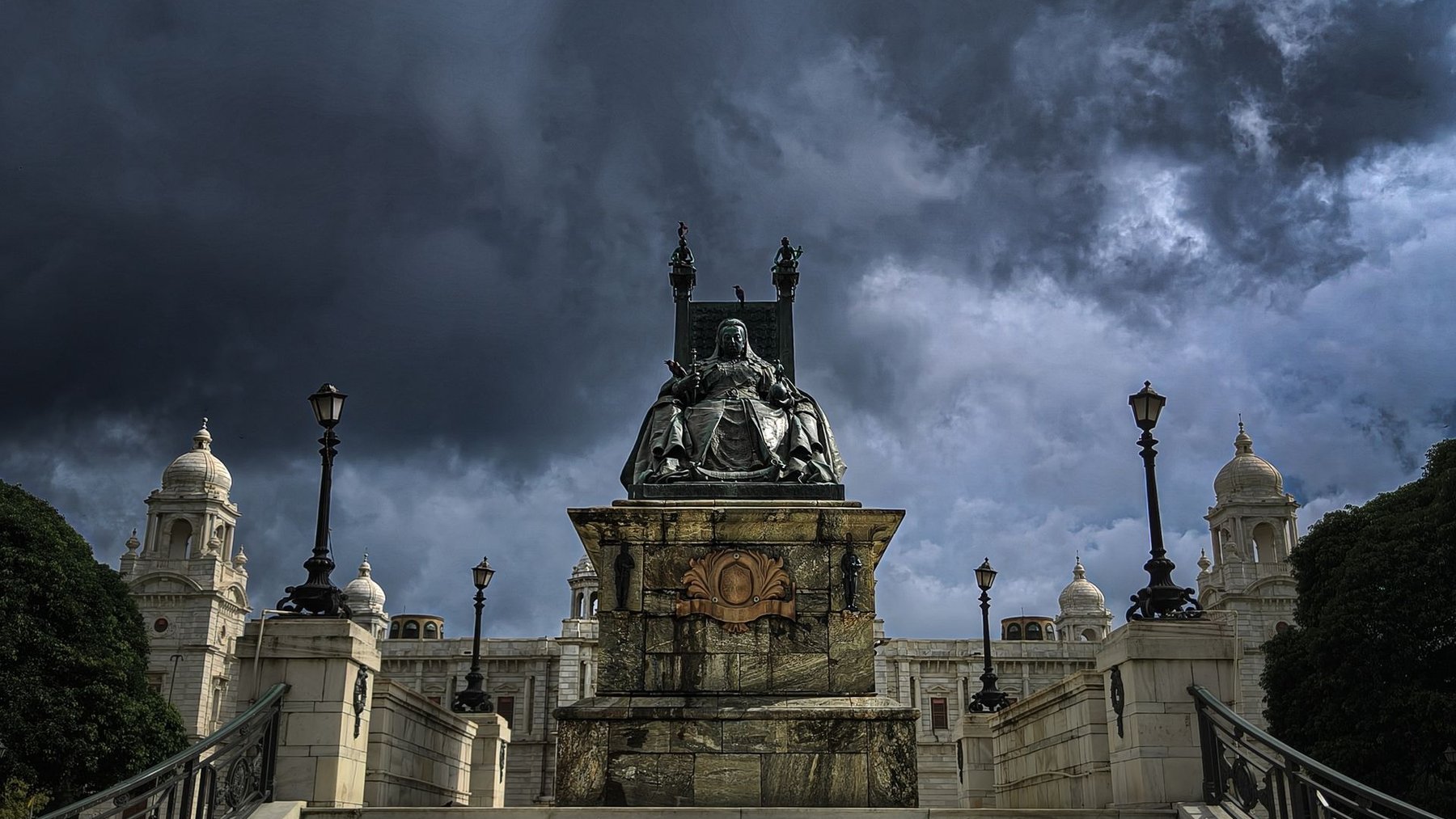
- Victoria Memorial and the Maidan at golden hour. The white marble monument photographs best in the last hour of daylight; the Maidan around it is Kolkata's shared front lawn — football matches, walkers, and horse- drawn tongas all at once.
- Eat deliberately, not just opportunistically. Kosha mangsho (slow- cooked mutton) and luchi for breakfast, a proper Mughlai biryani at one of the Park Circus or Chitpur institutions, and mishti (Bengali sweets — sondesh and mishti doi, not just rasgulla) from a neighbourhood shop rather than a tourist-facing one.
- Kali Puja and Bhoot Chaturdashi, roughly two to three weeks after Durga Puja, is Kolkata's quieter but equally sincere second festival of the season — smaller crowds, similar craft.
Sample itinerary
- Day 1 — North Kolkata: Kumartuli potters' lanes, Marble Palace, Jorasanko Thakur Bari, College Street and Indian Coffee House in the evening.
- Day 2 — South Kolkata pandal hop (if during Puja) or Victoria Memorial, St. Paul's Cathedral, and the Maidan at sunset; dinner at a Park Circus biryani institution.
- Day 3 — Howrah flower market at dawn, a short walk across Howrah Bridge, then a slow afternoon on the Ganga at Princep Ghat before an evening tram ride.